

Nobody tells you that the hardest part of taking magnesium is figuring out which magnesium you actually bought. I found that out the slow way, standing at my kitchen counter one evening with a bottle in one hand and my reading glasses in the other, squinting at a word that looked like a committee had spelled it. Glycinate. My own doctor had handed me a printout, said the glycinate form tends to be gentler on the stomach than the other ones, and sent me off to work out the rest myself. That was about two years ago. The bottle that lives in the bin to the left of my stove is Doctor's BEST Magnesium Glycinate, 200mg per serving, 240 tablets, and this is the honest version of what I wish somebody had handed me back then.
First, my standing disclaimer, and I mean it every single time. I am not a doctor, a nutritionist or a pharmacist. I am a fifty three year old retired dental office manager in Burlington, Vermont, with a husband named Paul and a raised bed herb garden behind the house that is a hobby and not a pharmacy. I read labels carefully because I have the time now and because I got tired of guessing. Everything below is one person's experience with one bottle. Your body, your medications and your bloodwork are not mine, and the person to talk to before you add anything to your routine is your own physician. I will keep saying that in every one of these pieces, because it is the most useful sentence in them.
The Quick Verdict
A plain tablet that does one quiet job without bothering my stomach. Less thrilling than the front of the bottle suggests, and more useful than most of what sits in my cabinet.
Amazon Check Today's Price →The one bottle I have refilled for two years without thinking about it
200mg per serving, 240 tablets, vegan and gluten free, and unflavored so it goes down with plain water. If your own doctor has already pointed you toward the glycinate form, this is where I landed.
Amazon Check Today's Price on Amazon →How I've Used It, and What My Routine Actually Looks Like
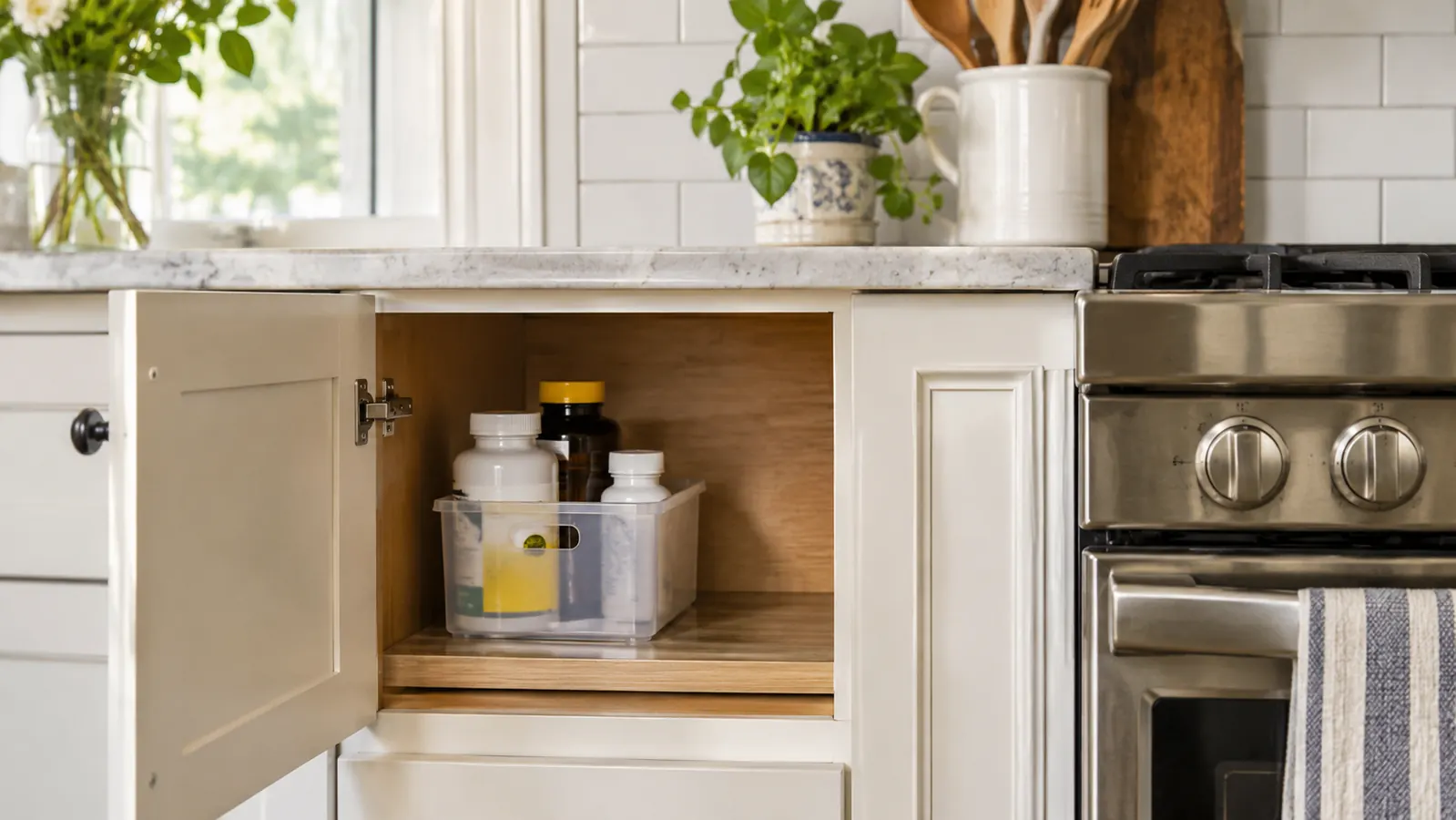
Two tablets after dinner with a glass of water, most nights of the year. That is the entire protocol. I am not a person who stacks powders or shakes a bottle of anything, and I am not going to become one at this point. My supplements live in a small labeled bin in the cabinet to the left of the stove, away from the heat and the steam, because years ago I killed a bottle of something by keeping it above the kettle. The Doctor's BEST bottle sits next to the chamomile tea, and the two of them are the last things I touch before I sit down for the evening.
The rest of the bin runs on a different clock. Vitamin D3 in the morning with breakfast, because my doctor suggested it three winters ago after a routine blood test and rechecks my levels once a year. Ashwagandha on weekdays with breakfast, off on weekends, started during a hard stretch when my mother moved into assisted living. Turmeric with lunch, since it has the black pepper extract and I do better taking it with food. None of that was clever planning. It was me noticing that anything I put in the morning pile gets swallowed in a rush, and anything I put in the evening pile actually gets taken.
The evening slot is the one that stuck. Magnesium after dinner, a cup of chamomile steeped five minutes with a saucer over the top, then twenty minutes on the porch doing nothing in particular. That is what two years of daily use looks like. It is not a routine anyone would film. It is the only kind of routine I have ever kept.

What the Label Actually Says
I read the whole panel again before writing this, mostly to see whether my memory had quietly improved the product. It had. The Doctor's BEST listing gives 200mg per serving of magnesium glycinate in tablet form, unflavored. It is marked vegan, non-GMO, gluten free and soy free. The feature copy describes the mineral as 100% chelated, which is the part that mattered to me, because the chelated forms are the ones my doctor said tend to be easier on the digestive tract than magnesium oxide.
The bottle also carries a line about the company having been at this for more than thirty five years, and a note that the formula is not buffered with fillers or additives. I have no lab in my kitchen and I am not going to pretend I can verify any of that. What I can do is tell you what is not on the panel, which is often more useful. No flavoring, no sweetener, nothing added to cover a taste, because in a tablet you swallow with water there is no taste to cover. The bottle itself is about five inches tall and a little over three inches across, which only matters if you are deciding where it will live.
One more label detail worth saying out loud. The benefit line on the listing reads cardiovascular health. I am not going to pretend I understand the mechanism behind that, and I am certainly not going to tell you it does anything for your heart. My doctor raised magnesium for reasons of their own, I picked a form, and I have kept taking it. If you are buying this for a specific health reason, that reason belongs in a conversation with a clinician rather than in a stranger's review.
The Part Nobody Tells You: It Is a Tablet, Not a Gummy
Here is the detail that never makes it into a short review. This is a tablet. Not a capsule, not a softgel, not a fruit flavored gummy that tastes like the candy aisle. If swallowing pills is hard for you, or if you have gotten used to chewable everything, this will feel like a step backward. Tablets are also not something you break neatly without a cutter, and nobody wants to be doing that at nine at night with the lights low.
I mention it not to talk you out of the bottle but because wrong expectations are what make people quit a supplement in week two. If you are picturing a chewy bedtime treat, a plain tablet and a glass of water is going to be a letdown. What you get instead is 240 of them, which is a genuinely long stretch. Mine runs months at two a night. There is a real advantage in that, and it has nothing to do with anything printed on the front of the label.
Two tablets after dinner, most nights, for about two years, and the only thing I can report without hedging is that my stomach never once complained.
What Changed, and What I Think Changed It
Somewhere around the six week mark I noticed I was settling down more easily in the evening. Not falling asleep in the chair, nothing dramatic. Just less of the wired, brain still talking feeling that had been my default for years. I want to be careful here, because I take four other things, I drink chamomile most nights, and any of them could be doing the work. What I will say is that the magnesium is the one I take closest to bedtime and the one I would notice the absence of first.
That is the honest version. Not that it changed my life. More that I stopped dreading the hour between dinner and bed. If you want a number to hang on it, the listing shows a 4.6 average across more than seventy seven thousand ratings, which tells you a lot of people found something worth keeping. It cannot tell you what it will do for you, and neither can I.
The other change is smaller and dumber. I stopped losing track of whether I had taken it. When something is one bottle, in one spot, at one time of day, the habit builds itself. When I was buying a different form every few months, I could not have told you on a Tuesday whether I had taken anything on Monday.
How It Fits With the Rest of My Bin
People ask me whether I notice a difference between this and the other forms, and I always give the same unsatisfying answer. The difference I can vouch for is in my stomach, not in my bloodwork. Magnesium oxide, which is what a lot of the big bottles at the front of the shelf are, did not agree with me. That is the entire reason my doctor steered me toward glycinate in the first place, and it is the entire reason I have not shopped around. I am not qualified to rank absorption rates and I am not going to pretend a personal experiment of one is a study.
What I can say is that it slots into a bin with four other things without any fuss. No timing conflicts I have been warned about, no flavor, no reason to take it with food or away from food. It sits next to the tea and it gets taken with the tea. When something requires a shaker bottle and three minutes of measuring, it lasts about a month in my house. This has lasted two years.
Where It Falls Short
The tablets are not small. If swallowing is a problem for you, this is the wrong format and no amount of liking the company will fix that. It is the single most likely reason a person would stop, and I would rather say so plainly than have you find out on night one.
Second, the label is quiet. No scoop, no flavored drink, no little ritual. If you are the kind of person who needs a product to feel like an event, a plain unflavored tablet will feel like taking a vitamin and you will probably forget it. That is not the bottle's fault. It is still a real reason people quit.
Third, and this is the one I would flag hardest: nothing on this bottle tells you whether you personally need magnesium. There is no test in the box. I started because my doctor brought it up after a routine blood test, and I have kept at it because it is easy to keep at and easy to swallow. If you are starting because a video told you to, you are guessing. Guessing with supplements is how people end up with six bottles and no idea which one is doing anything.
What I Liked
- Plain, unflavored tablet with nothing to mask, so it goes down with water and no fuss
- Chelated form, which my doctor described as gentler on the stomach than other magnesium forms
- 200mg per serving and 240 tablets in the bottle, so one purchase runs for months
- Vegan, non-GMO, gluten free and soy free, which matters if you read panels
- No buffering fillers or additives listed on the panel
Where It Falls Short
- It is a tablet, and a fairly good sized one, so it is not for anyone who struggles with pills
- Unflavored and uneventful, which makes it easy to forget on a busy night
- The bottle gives you no way to know whether you actually need magnesium
- No taste, no ritual, nothing to make the habit stick on its own
The Questions I'd Ask Before Buying
First, has your own doctor actually raised magnesium, or is this a hunch? Mine came out of bloodwork. That is a much better starting line than a stranger on the internet, and I include myself in that.
Second, what is the whole list? Not just this bottle, everything, including the things you take only when you remember. I bring a photo of my labels to my yearly checkup and I ask about the combination, not just the individual items. It takes four minutes and it has already caught one bad pairing for me.
Third, can you actually swallow a tablet that size every night? If the answer is no, the best made bottle in the world will sit in your cabinet until it expires. Buying the form you will actually take beats buying the form that looks better on paper.
What Two Years of Buying It Has Taught Me
The first thing I learned is that supplements are boring and that boring is the point. There was no turning point, no morning where everything clicked. There was a bottle in a bin, taken after dinner, and eventually a year had gone by and then another one. The second thing I learned is that the form matters more than the brand for someone like me. The suggestion from my doctor was about glycinate as a form, not about any particular label. I landed on Doctor's BEST because the panel was clean and because 200mg per serving let me keep it simple, not because I believe the front of the bottle.
The third thing is that I have never once had to think about this purchase, which is a compliment I do not hand out often. The bottle shows up, it goes in the bin, it lasts months, and it does not ask anything of me beyond a glass of water. I have bought supplements that demanded measuring, mixing and a flavor I had to talk myself into. Those are all gone. This one is still here.
Who This Is For
This is for someone who has already had the conversation. Someone whose doctor mentioned the glycinate form, or who tried magnesium oxide and found it rough on the stomach, and who wants a plain tablet at a clear dose from a company that has been making it a long while. It suits people who like one bottle, one spot, one time of day. It also suits people who read panels for fun, because there is blessedly little on this one to argue with.
Who Should Skip It
Skip it if you have not talked to your own doctor yet, and especially if you are pregnant, nursing or taking prescription medication. That is not a formality, it is the whole point of this review. Skip it if swallowing tablets is hard for you, because powders exist and there is no shame in them. Skip it if you need a flavor or a ritual to remember anything. And skip it if you are looking for something to fix a specific problem, because this is a supplement, not a treatment, and nothing in my cabinet has ever cured anything.
If your doctor already pointed you at glycinate, this is the bottle I would hand you
200mg per serving, 240 tablets, vegan, gluten free, unflavored. Two years in my cabinet and I have not once thought about switching.
Amazon Check Today's Price on Amazon →I rewrote this piece several times, mostly to take out the parts where I sounded like a brochure. What is left is dull and true. A plain tablet, taken after dinner, for about two years, tolerated well, easy to keep buying, and nothing dramatic about it. If that sounds like the kind of recommendation you were hoping for, you are probably the person this review was written for. If you wanted fireworks, you are going to want to talk to your doctor instead of to me.