

Three winters ago my doctor set a printout on the counter, tapped a line near the bottom, and asked what I did for vitamin D between November and April. I did not have an answer. I was fifty then, managing the front desk at a dental office in Burlington, and every February I felt like I was walking through wet sand. Not sick, exactly. Just flat. The kind of tired a second cup of coffee does not touch and a weekend does not fix.
What I did next was read. Then read some more, and mostly read labels, because a good share of what passes for vitamin D advice online is somebody selling something. I am not a doctor, a nutritionist, or a pharmacist. I am a fifty three year old woman in Vermont who wanted one small, boring habit she could actually keep. What I landed on was a bottle of Nature Made Vitamin D3 5000 IU softgels, one softgel with breakfast, and an annual blood test so my own doctor could tell me whether the dose was still right. That is the entire routine. It has not changed in three winters, and neither has the bottle.
The Quick Verdict
One small softgel, one dose, one bottle that covers about six months. It is the least interesting part of my morning, and that is exactly why it is still in the bin three years later.
Amazon Check Today's Price →The bottle that made it through three Vermont winters
5000 IU (125 mcg) per softgel, 180 to a bottle, gluten free and USP Verified. One with breakfast, same time every morning. Talk to your doctor about the dose first.
Amazon Check Today's Price on Amazon →How I've Used It
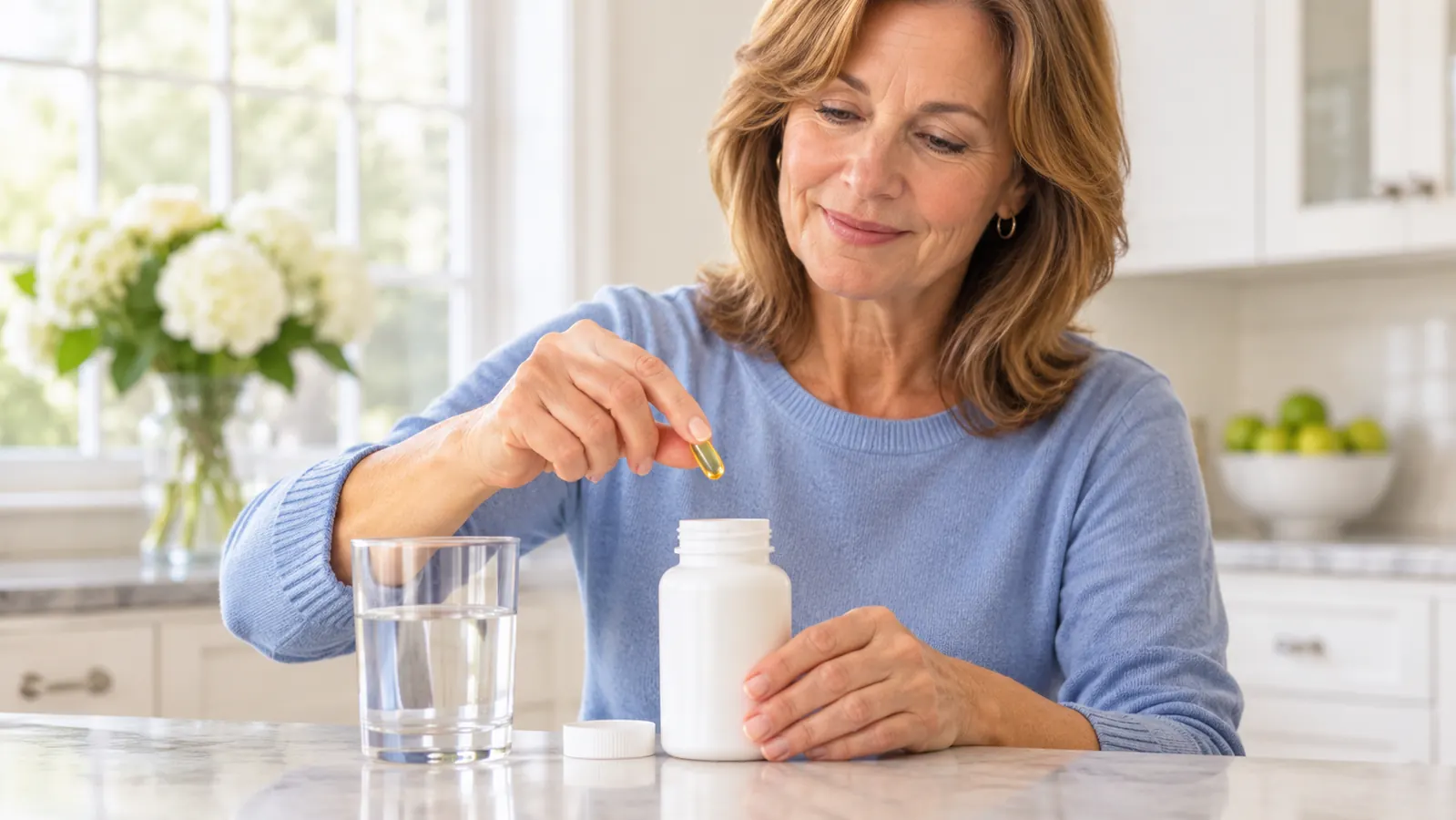
I started in late October three years back, a few weeks after that blood test, and I have taken one softgel with breakfast nearly every morning since. Breakfast in this house is at 7:30, which means the softgel goes down with a glass of water and whatever Paul has put on the table. Paul is my husband. He is on a different dose entirely, which tells you something about how individual this whole thing is.
The Nature Made bottle lives in a small labeled bin in the kitchen cabinet to the left of the stove. That spot is deliberate. It is away from the heat of the burners, away from the steam when a pot boils over, and at eye level so I do not have to hunt for it at 7:30 in the morning. Vitamins that hide get forgotten. Vitamins that sit in the same labeled bin for three years get taken, and that is most of the reason this one worked for me.
I buy the 180 count bottle. At one a day that is roughly six months of mornings, so I am not reordering every few weeks and I am not staring at an enormous tub of softgels that will outlive my enthusiasm. When I travel, which is mostly to see my mother in New Hampshire, four or five softgels go into the weekly pill organizer with the rest of the morning routine and the Nature Made bottle stays home. Nothing about the system is clever. It just survives contact with a normal week.
The yearly recheck is not a formality in this house. Every physical, my doctor orders the panel, I get the result, and we decide together whether the number is where she wants it. That appointment is the entire reason I trust the bottle. Without it I would be guessing at a dose for years, and guessing is how people end up taking something for a decade that was never matched to them in the first place.
What the Label Actually Says
The Nature Made label is the reason I picked this bottle over the others on the shelf, so it is worth being specific. One softgel gives 5000 IU of vitamin D3, which is 125 mcg, and the bottle holds 180 softgels. It is a softgel rather than a tablet, it is unflavored, and it is gluten free. The allergen line lists soy alongside the gluten free note, which matters if you watch soy the way some people watch gluten. Read that line before you buy, not after.
The bottle also carries USP Verified. That means the product was checked against a third party standard for things like whether what is printed on the label is actually in the softgel. I have come to care about that mark more than any claim on the front of a bottle. A supplement can print anything it likes. A verification mark is a claim somebody else went and checked.
The listed benefits are bone support and immune system support, both carrying the footnote that says the statement has not been evaluated by the Food and Drug Administration. I am not going to dress that up. This is a vitamin, not a treatment, and nothing in three winters of taking it suggests otherwise. What the label gives you is a dose and a form. What your doctor gives you is whether that dose is right for your body, and those are two different questions.
What the label does not tell you is anything about your own level, and that is the piece most people skip. A bottle cannot know whether you are low, average, or already getting enough from food and sun. It just gives you 125 mcg and trusts you to have had the conversation first. I had mine. That is the only reason the number on this bottle means anything to me.
I compared the dose to my own paperwork before I bought anything. My doctor had written the number down, I held the bottle next to it, and they matched. If they had not matched, I would have called her office. That sounds obvious and I think most people skip it, buy whatever the shelf recommends, and then wonder two years later why nothing changed. The bottle should follow the conversation, not the other way around.
Fitting It Into a Morning I Don't Have to Think About
The reason this one stuck, when an earlier vitamin did not, has nothing to do with the vitamin. It has to do with the bin. The earlier one lived in a drawer with the napkins and I took it maybe four days out of seven. The bin is at eye level, the bottle is the first thing in it, and the whole thing rides on breakfast, which is already a habit I am not going to break.
Size matters more than people admit. The bottle is about two inches square and a little over four inches tall, and the softgels are small enough that I have never once thought about swallowing one. That sounds like a small thing until you are the person who choked on a large tablet years ago and now dreads the whole category. I take mine with water and a bite of food. I have never had an upset stomach from it.
The evening half of my routine looks nothing like this. There is a cup of tea after dinner, and a couple of things I take later, and a whole separate set of habits built around winding down. The morning half is the opposite. It is thirty seconds long, I do not think about it, and after three years I have decided that is the highest compliment I can pay a daily supplement.
The softgel did not change my life. The labeled bin, the 7:30 breakfast, and the yearly blood test did. The softgel just had to be small enough and boring enough to survive all three.
What Three Winters Have Actually Felt Like
Here is where I have to be careful, because this is where supplement writing usually goes wrong. I cannot tell you the softgel fixed my winters. I can tell you what changed. Through the long months I stopped getting that February flatness that used to put me on the couch by seven. I also started walking the bike path along Lake Champlain more consistently and cut back on the second cup of coffee. Any of those could be responsible. Honest answer: probably all of them are.
What I can point to is the blood test. My doctor rechecks my level once a year at the same physical, and the second and third years came back in a range she was happy with. She has not changed my dose. That is the only objective feedback I have, and it is worth more to me than how I feel on any given Tuesday, because a feeling is a moving target and a number is not.
The other thing three winters taught me is how unremarkable it becomes. I do not feel anything after I swallow one. There is no rush, no warmth, no noticeable shift. That is the honest version, and I think it is the version most people need before they buy a bottle. If you are waiting for a moment of change you can point to, this is not that kind of product, and it would be the first to say so.
There is a seasonal piece I did not expect either. In summer I am outside far more, so my habits shift, and my doctor and I have talked about whether the dose should change with the seasons. It has not, so far, but the fact that it came up is the point. A bottle you buy once and never discuss again is not a routine. It is a purchase.

The Tradeoffs Worth Knowing
5000 IU is not a small dose. It is near the top of what you will find on a shelf, and the listing itself says it is for people with higher vitamin D needs or a deficiency, which is exactly what my doctor told me I had. If you have never had your level checked, starting at this dose because a review recommended it is backwards. Get the test. Then let someone who reads blood work for a living hand you a number.
The soy is a real consideration in some households. The small bottle is a plus, but softgels kept somewhere warm or steamy will eventually start sticking together, so mine lives away from the stove and never in the bathroom. And 180 softgels is a six month supply, which is lovely if you are consistent and a waste of shelf space if you tend to quit in February. I would rather say that plainly than pretend a bottle is a commitment.
What I would do differently is start with the test instead of the bottle. People I know take far lower doses on their doctor's advice, and the difference between their number and mine is the whole argument for getting checked before you buy anything. Two people in the same town, two very different bottles, and both of them correct for the person holding them.
What I Liked
- One softgel a day, so the habit barely exists
- 5000 IU (125 mcg) per softgel, the dose my doctor suggested after a blood test
- 180 count bottle, roughly six months at one a day
- Gluten free and unflavored
- USP Verified, which I trust more than any claim on the front of the bottle
- Small enough to swallow with water and a bite of breakfast
Where It Falls Short
- 5000 IU is a high starting dose for anyone who has not been tested
- The allergen line lists soy
- Softgels can stick together if stored somewhere warm or steamy
- Nothing noticeable happens day to day, which is honest but not exciting
- Six months is a long commitment if you are still deciding
Who This Is For
This is for the person who already knows their number. If your doctor looked at a blood test, flagged a low vitamin D level, and suggested a higher dose, the Nature Made bottle lines up with that conversation almost exactly. It is also for the person who has tried three different vitamins and abandoned all of them, not because the vitamins were wrong but because they lived in a drawer where nobody saw them. A labeled bin and a bottle that hits the same moment every morning does more than a better formula ever will.
One more thing, and I mean this without any hedging. Talk to your own doctor before you add anything, including this. That goes double if you are pregnant, nursing, or taking prescription medication, because interactions are real and a review written by a stranger in Vermont is not medical advice.
Who Should Skip It
Skip it if you have not been tested. 5000 IU is more than a maintenance dose for plenty of adults and there is no prize for guessing. Skip it if you avoid soy. Skip it if you already take a multivitamin or a calcium product with vitamin D in it, because those stack quietly and that is a conversation for your doctor rather than a review. And skip the idea that any softgel carries you through a Vermont winter on its own. Walks, sleep, and people do most of that work.
One bottle, one softgel, one yearly blood test
Talk to your doctor first. If 5000 IU is the number they give you, this is the bottle that has sat in my labeled bin for three winters without me thinking about it once.
Amazon Check Today's Price on Amazon →