

Three winters ago my doctor looked at a routine blood test, stopped at one line, and asked what I was doing about vitamin D. Nothing, apparently. I was working the front office of a dental practice then, driving into Burlington before the sun came up and driving home after it went down, and I had not given it a single thought. She suggested a daily supplement and told me to come back in a year so we could see where the number landed. I stood in the pharmacy aisle and read labels for about twenty minutes. I bought Nature Made Vitamin D3 5000 IU softgels because the label answered my questions without promising me a different life. The bottle has been in the cabinet to the left of my stove ever since.
I am not a doctor, a pharmacist or a nutritionist. I managed a dental office for twenty-two years and I read labels the way some people read the news. None of this is medical advice. It is ten reasons a 53-year-old woman in Vermont has kept one softgel in her breakfast routine for three winters, and why I stopped shopping around. Talk to your own doctor before you add anything, especially if you are pregnant, nursing or taking a prescription.
The softgel I take before my coffee goes cold
Nature Made Vitamin D3 5000 IU, 180 softgels, one a day with breakfast. I checked the dose with my doctor first, and I would tell you to do the same.
Amazon Check Today's Price on Amazon →The format is boring, and boring is why it stuck
One softgel. Not a powder I scoop, not a dropper I count, not three capsules with a meal. I take it with breakfast at 7:30, swallow it with the rest of my water, and put the bottle back in the cabinet. Every supplement that fell out of my routine asked me to do something different on a Tuesday than I did on a Monday. This one asks nothing, so it survives the weeks when I am tired and the mornings when I am running late.

5000 IU was my doctor's call, not a number I grabbed off a shelf
I want to be clear about this, because the internet is full of people who take the biggest number they can find. I did not pick 5000 IU because it sounded strong. My doctor and I picked it after she read my blood work, and she rechecks the number once a year. The bottle itself says the dose is for people with higher vitamin D needs. If she told me to drop to a lower dose next February, I would do it without arguing.
The dose is printed two ways, so there is no math before coffee
The front of the bottle says 5000 IU and 125 mcg. I do not have to convert anything or trust my memory at 7:30 in the morning. When my doctor asks what I take, I can read the number off the bottle instead of describing it from memory, which is how people end up saying 'the big one' to a pharmacist. Small thing. It has saved me confusion more than once, including at a travel clinic.
USP Verified is the line I check before I look at anything else
Every bottle in that aisle had a story on the front. This one carries the United States Pharmacopeia Verified mark, which means an outside group checked that what the label lists is what is actually in the bottle. I spent years reading labels for a dental office, ordering supplies and comparing fine print. A third-party check is worth more to me than a slogan. It is the first thing I look for now, on this bottle or any other.
180 softgels matches how I actually buy things
One a day means a 180-count bottle lasts me roughly six months. I reorder twice a year, usually when I notice the bottle getting light, and I am not opening a new package every few weeks. That matters more than it sounds. The supplements I quit were the ones that ran out constantly and turned into a chore. A bottle that sits on the shelf and does its job quietly is one less thing on the list.
Unflavored and gluten free means my breakfast does not change
I eat the same toast and drink the same coffee most mornings. The label says unflavored and gluten free, and I do not taste anything when I swallow it. That is the entire point. If a supplement makes me change what I eat, or leaves a taste I have to chase with something else, I will stop taking it inside a month. This one disappears into the routine.
The label is honest about who it is for
Most supplement bottles try to be for everyone. This one says plainly that 5000 IU is for people with higher vitamin D needs or a deficiency, which is a narrower audience than the front of the bottle usually aims at. I appreciate that. It tells me the product is not pretending to be a universal multivitamin. It also tells me this is the wrong bottle for someone whose levels are already fine, and that is a decision for a doctor, not a review.
It has a home in the cabinet, not a slot in my memory
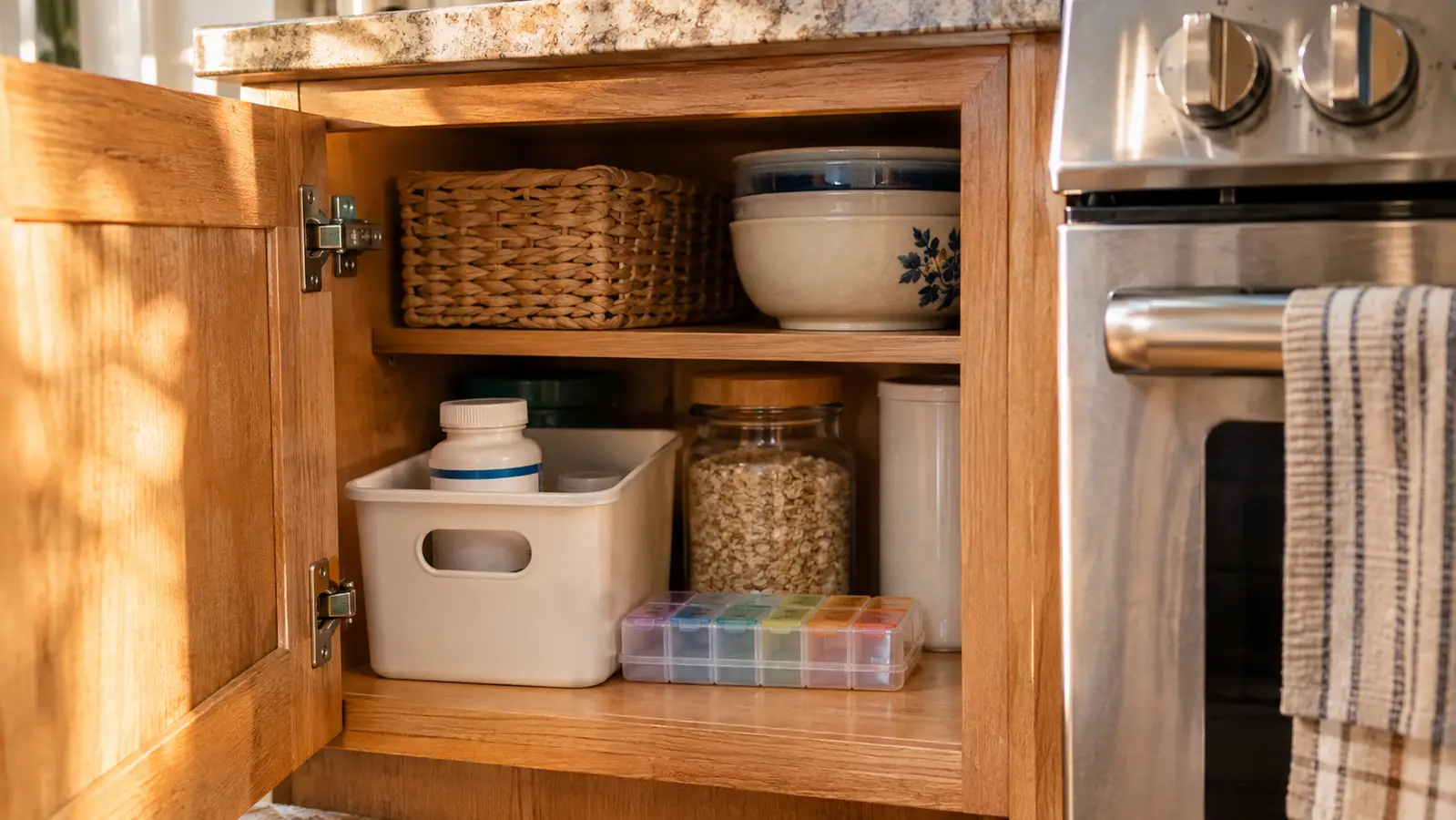
The bottle lives in a small labeled bin in the cabinet to the left of the stove, away from the heat and the steam. Breakfast is at 7:30, the bin is at eye level, and the softgel goes down before the coffee is gone. When I travel, the capsules go into a weekly pill organizer and the bottle stays home. I have never once had to think about where it is. Habits stick when they have a place to live.
The promise on the label is small, and I prefer it that way
The Nature Made bottle lists bone support and immune system support, and there is a small footnote marker next to those words. I have read enough labels to know that the footnote is doing real work. Nobody is promising me a winter without a cold. What I want from a supplement is that it is what it says it is, at the dose it says, every time I open the bottle. The claims are modest. The consistency is the part I am actually buying.
I check it with a blood test instead of a feeling
I cannot feel a vitamin. What I can do is have blood drawn in the winter and let my doctor look at the number and decide whether the routine stays the same. That is the whole system, and it is why I have not switched brands every few months the way I used to with other things. Three winters, one softgel, one yearly recheck, and the same bottle in the same cabinet. Not exciting. It has been the easiest part of my routine to keep.
That is the list. Ten reasons, none of them dramatic. I have a husband who takes a different supplement than I do, a raised-bed herb garden out back that is a hobby and not a pharmacy, and a doctor who is willing to look at a lab result with me once a year. If your situation looks like mine, some of the list above will be useful. If it does not, some of it will not apply, and that is worth knowing too.
What I'd Skip
I would skip the megadose gummies that advertise a number on the front and bury the serving size on the back. I would skip anything that asks me to take three or four capsules to get the dose on the label, because I know how that ends in my house. I would skip the bottles that promise energy, mood and sleep from one softgel. And I would skip buying a high dose because a friend takes it, especially without a blood test to show whether you need it. My doctor picked my number. Yours should pick yours.
The other thing I would skip is switching. I spent a few years hopping between brands because a label looked better or a shelf talker caught my eye, and the only result was a cabinet full of half-used bottles and no clear idea what I was actually taking. Pick one that is verified, take it at the same time every day, get your levels checked once a year, and leave it alone. That is not the popular thing to write on the internet. It is what worked here.
My doctor picked the number. The bottle just has to be there at 7:30 in the morning.
Three winters, one softgel, one bottle in the cabinet
Nature Made Vitamin D3 5000 IU, 180 softgels, unflavored and gluten free. Ask your doctor about the dose before you start, then keep it simple.
Amazon Check Today's Price on Amazon →