
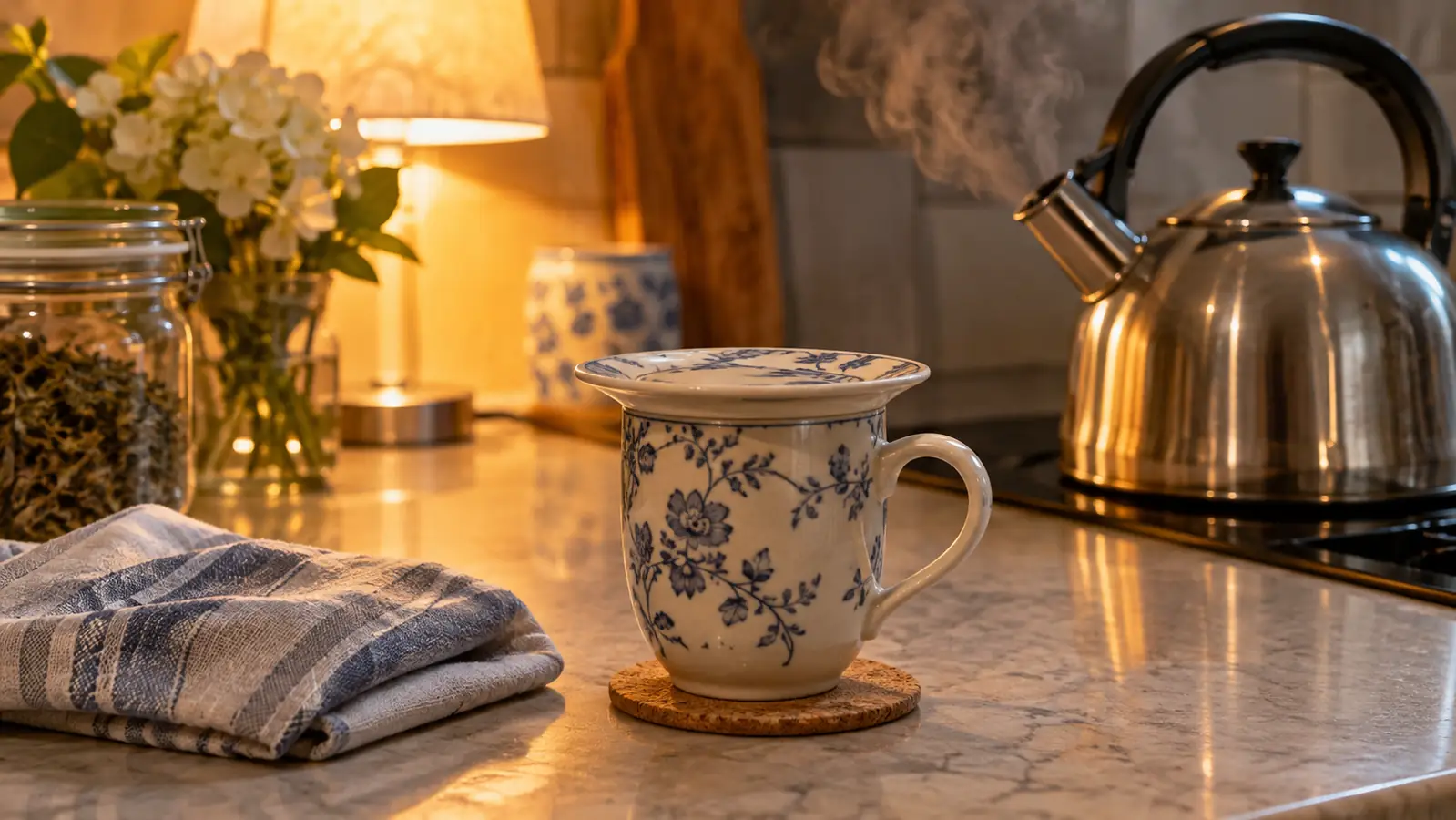
Six in the evening is where my good intentions usually go to die. I come in from the car, Paul has the radio on in the kitchen, the mail is spread across the counter, and by the time the dishes are upside down in the rack I have talked myself out of whatever small thing I promised myself I would do that day. For years I thought that was a discipline problem. It is not. It is a scheduling problem. A habit with no time slot does not survive contact with a Tuesday.
So when I wanted something calming in the evening, I started with the time, not the product. The product came second, and it has been the same one for about four years: a box of Traditional Medicinals Organic Chamomile with Lavender herbal tea. That is longer than I have taken any capsule in my cabinet, which tells you something about how much the fitting-in part matters. I am not a doctor, a nutritionist, or a pharmacist. I was a dental office manager for more than twenty years, which means I spent two decades reading fine print and learning the gap between what a brochure promises and what the policy actually covers. Talk to your own doctor before you add anything to your routine, calming or otherwise, especially if you are pregnant, nursing, or taking a prescription medication.
The box that has lived in my cabinet longer than any capsule
Sixteen sealed bags, organic, caffeine free, chamomile with lavender. Four years of evenings and I still buy the same one. Check today's price on Amazon before you decide anything.
Amazon Check Today's Price on Amazon →Here is the whole method, five steps, in the order I actually did them. None of it is complicated. The hard part is step five, and I will get to why.
Step 1: Attach the cup to a time you already keep
Do not invent a new hour for this. You will lose it inside a week. Pick something you already do every single day without thinking: the last plate going into the rack, the radio switching over to the evening program, your husband falling asleep in the chair. For me it is the kitchen light going off over the sink. That is the trigger. The tea is the thing that happens next.
A new habit needs a hook, and an existing habit is the sturdiest hook there is. I did not need willpower to remember. I needed the sink. Four years later I still do not think about it. The kettle goes on when the leftovers go into the fridge.
One practical note. Pick a time at least two hours before bed if you can. Not because the tea keeps you up, since this one is caffeine free, but because a full mug close to bedtime means a trip down the hall at two in the morning, and that does more damage to your night than any cup of tea will fix.
Step 2: Read the box before you read anything else
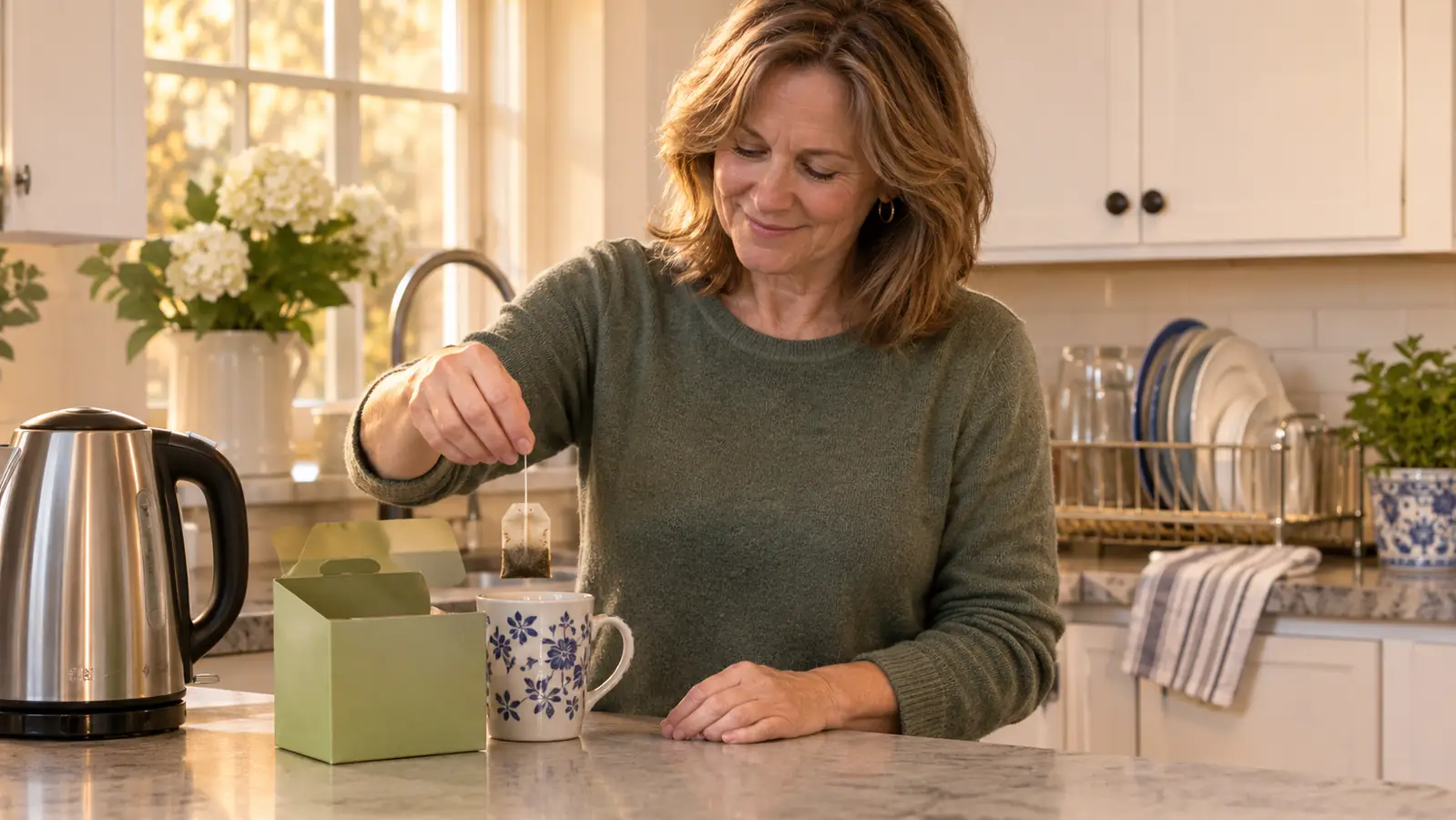
I read labels the way some people read the sports page. What I want is the boring information, and Traditional Medicinals prints it plainly. It is one box of sixteen sealed tea bags, organic, gluten free, and caffeine free. The flavor is chamomile and lavender. The box lists a shelf life of about a year, which is why I do not buy six boxes when they go on sale. Tea that sits in a cabinet for two years tastes like the cabinet.
The front of the box also carries a line about settling your nervous system when stressed, with an asterisk next to it. I am careful with language like that. It is the company's claim, not my experience and not medical advice, and I take it the way I take any label copy: it tells you what the product is for, not what it will do to you personally. What I can tell you is what a cup after dinner does in my own evening, which is a smaller and more honest kind of statement.
The other thing on that box worth noting is the taste description. Delightfully floral with distinct lavender notes, it says. That is accurate, and it is also the reason some people will not like this tea. Lavender is a strong flavor and it is not for everyone. If you want plain chamomile, buy plain chamomile. Do not buy this and then decide you hate lavender. That is a shopping problem, not a tea problem.
Step 3: Steep it covered, for five minutes, and stop guessing
For about a year I made this tea badly. I would drop a bag in a mug, pour water that was not quite hot enough, wander off, come back, and drink something that tasted like a rumor of chamomile. Then I actually read the side of the box. Five minutes, covered.
Covered matters more than people think. The good part of a tea rides out on the steam, and if you leave the mug open, the steam leaves and takes the flavor with it. I set a small saucer over the top. A mug with its own lid works just as well. Five minutes with a saucer on top, then the bag comes out. Do not leave the bag in. It turns bitter and the lavender goes soapy.
Water temperature is the other half of it. I take the kettle off just before a rolling boil. Pour water that is still churning hard and you scald the herbs, and the cup comes out flat and a little harsh. If you are not sure, put the hot water in the mug first, wait about thirty seconds, then add the bag. It is a forgiving trick, and I wish someone had told me in year one.
Step 4: Put the cup at the end of dinner, not the end of the night
There is a difference between a cup you drink while you are still clearing the table and a cup you drink at ten o'clock with your phone in your other hand. I have done both, and only the first one is worth the tea.
The cup at the end of dinner does two jobs. It marks the end of the working part of the day, which is a boundary I did not know I needed until I had one. And it puts something warm and unsweet in my hands at the exact hour I used to go looking through the pantry for something sweet. The box says not sweet, and that is correct. If you need honey, add honey, but try a week without it first. Your taste adjusts faster than you would expect.
Step 5: Keep a two-week note and let it decide for you
This is the step I would not skip, and it is the one most people skip. For two weeks, write one line in the evening: whether you had the cup, and one word about how the evening went. Not a paragraph. A word. Calm. Restless. Fine. Long.
The reason is that memory is a liar. If you buy a box of tea hoping it will help you wind down, you will probably decide it helped, because you spent money and you want it to have worked. A note written at the time is harder to argue with. If fourteen lines go by and nothing changes, you learned that for the cost of one box, and you can stop with a clear conscience. That is a good trade.
What I found in my own notes was modest. The evenings I had the cup were the evenings I stopped working a little earlier. Was that the tea? I do not know, and I am not going to pretend I do. I know that the one thing I never dropped, through two winters, a knee that ached after long walks on the bike path, and the year my mother moved into assisted living, was the evening cup of Traditional Medicinals. The capsules came and went. The tea stayed.
Fourteen lines, one word each. That is the whole test, and it costs less than the box of tea.
What Else Helps
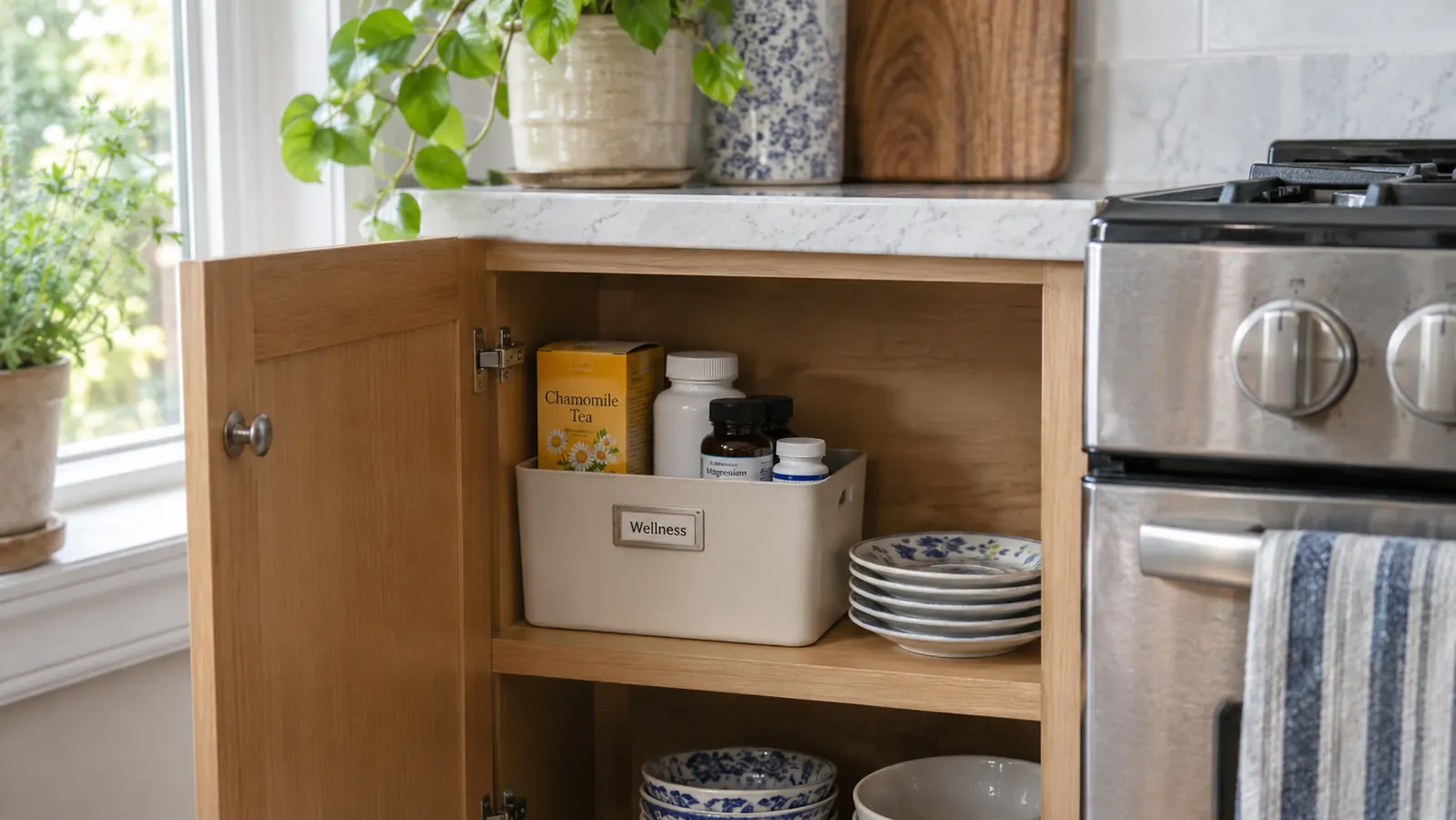
Store the box where you will actually see it, and away from heat and steam. Mine lives in a small labeled bin in the cabinet to the left of the stove. The left of the stove part is not fussiness. Steam off a boiling pot gets into an open box and the bags go stale, and above the kettle is the worst real estate in the kitchen.
Keep the saucer with the mugs, not in a drawer. Anything that adds a step between you and the cup is a reason not to make it. I also keep a few bags in a small dish beside the kettle so I am not opening a box with wet hands. When I travel I tuck two bags into the same weekly pill organizer I use for my capsules, so the evening does not change shape just because the address did.
If you want to grow your own chamomile, grow it because you like the garden. I have a raised bed behind the house with mint, chamomile, and basil, and I enjoy it, but it is a hobby and not a pharmacy. Fresh flowers make a pleasant cup in July and the box of Traditional Medicinals in the cabinet makes a dependable one in February. I am not going to tell you the two are the same thing.
The last thing that helped was telling Paul. He now puts the kettle on when he sees me start the dishes. A habit other people know about is a habit that survives a bad week.
Where I Would Slow Down
Three honest cautions. First, this is tea, not treatment. If you are not sleeping, if your worry is getting worse, if something feels wrong, a cup of chamomile is not the answer and a doctor is. I say that as someone who spent a decade hoping a product would solve a problem that needed a conversation.
Second, sixteen bags is not a lot. One cup a night and you are back at the store every couple of weeks. If that bothers you, plain chamomile in a larger box does a similar job for less. I keep buying the chamomile and lavender version because I like the floral taste and I have decided the difference is worth it to me. You may decide otherwise, and you would not be wrong.
Third, check with your doctor if you are on medication, pregnant, or nursing, and ask your pharmacist too, because they are the ones who know about interactions. Herbal tea is gentle, but gentle is not the same as nothing. My doctor knows about every single item in my cabinet, tea included, and that is the arrangement I would want for anybody reading this.
Start with one box and fourteen lines in a notebook
Sixteen sealed bags, five minutes covered, one cup at the end of dinner. Give it two weeks and let your own notes decide.
Amazon See the Current Price on Amazon →