

The number on the front of the box is 16. Not 20, not 30. Sixteen sealed tea bags, one box, and if you drink a cup most evenings the way I do, that works out to a little over two weeks. I have been buying Traditional Medicinals Organic Chamomile with Lavender at that rhythm for about four years now, longer than I have stuck with any single bottle in my kitchen cabinet. That number is the first honest thing I can tell you about this tea, and it is the thing I forget every single time I am standing in the aisle trying to remember whether I already have a box at home.
I am Joanne Pelletier. I am 53, I live in Burlington, Vermont with my husband Paul, and I spent most of my working life as a dental office manager. That job gave me a habit of reading labels line by line, and my late forties gave me a shelf of things I take every day. I am not a doctor, a pharmacist or a nutritionist. I am a woman with a tea habit and a doctor who knows what is in my cabinet, and that is the whole of my authority here. If you want a clinical breakdown, this is not that. If you want to know what four years of one box actually looks like, keep reading.
The Quick Verdict
A genuinely pleasant caffeine-free evening tea with a real lavender note, sold 16 bags to a box. It does what a cup of herbal tea can do and nothing a cup of herbal tea cannot. Check the count before you commit.
Amazon Check Today's Price →Four years of evenings, and I still buy the same box
Organic, caffeine free, gluten free, and floral with a distinct lavender note. If you want a plain chamomile, this is not that. If you want the version with a little more character, start here.
Amazon Check Today's Price on Amazon →Here is the short version before the long one. This is a pleasant herbal tea with a clear lavender note, it has no caffeine in it, and it has been part of my evenings since about four winters ago. What it is not is a sleep aid, a treatment for anything, or a replacement for something your doctor put you on. Most of the disappointment I read in tea reviews comes from people expecting the second thing and getting the first. I would rather tell you what the box actually says and let you decide whether that is worth a spot in your cabinet.
How I Ended Up With a Tea Habit
In my late forties I felt flat through the Vermont winters. A routine blood test came back with low vitamin D, my doctor suggested a supplement, and I started building something that looked like a routine instead of a pile of bottles. The tea came before any of the capsules. I started with the Traditional Medicinals chamomile with lavender because the label was the most careful one on the shelf, and careful is the thing I look for first now. It was the cheapest thing to try and the easiest thing to keep, and it is the only part of that routine that has never once felt like homework. I take my capsules with breakfast around 7:30 in the morning. The tea is the other end of the day, after dinner, when the dishes are done and the house goes quiet.
I also grow a little of my own. There is a small raised bed behind the house with mint, chamomile and basil in it. It is a hobby, not a pharmacy, and I am not suggesting anyone replace a box with a garden. But growing chamomile once taught me what the dried flower is supposed to smell like, and that made me a pickier buyer. When a bag smells like dusty hay, I notice now. This one does not.
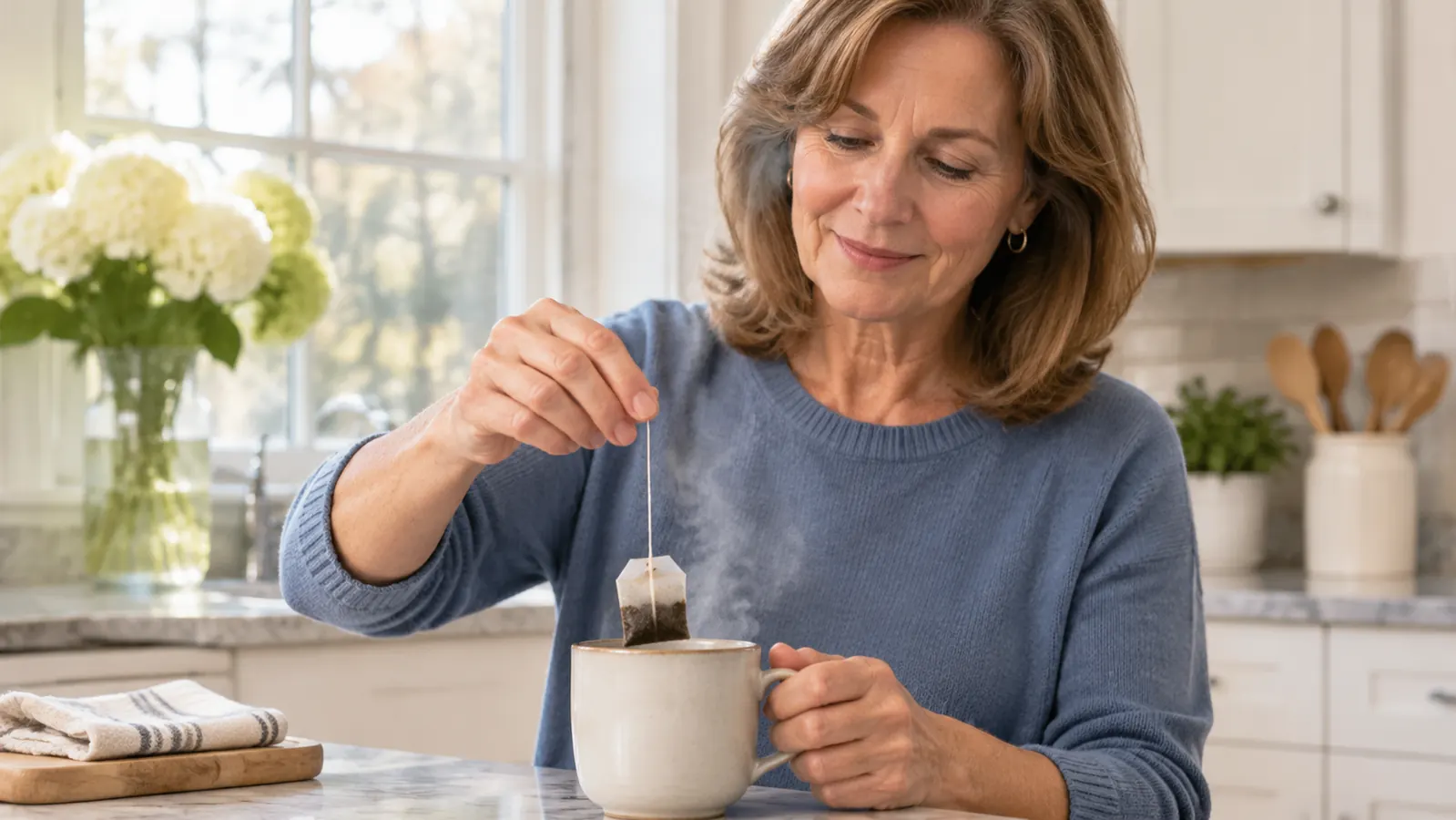
How I Actually Use It, Four Years In
One bag, one mug, water just off the boil, five minutes, and a saucer set on top as a lid. That is the whole method. The box does not tell you to cover the cup. I do it because the steam coming off a hot mug carries the lavender with it, and covering the cup keeps more of that in the water where you want it. Paul laughs at the saucer. He also asks for a cup about twice a week now, so I let him laugh.
Storage matters more than people think. My tea lives in the labeled bin in the kitchen cabinet to the left of the stove, which is away from the heat of the burners and away from the kettle steam. The Traditional Medicinals box lists a shelf life of 365 days, and that is roughly true in my experience. A box opened and finished inside three weeks tastes the way it should. A box I found in the back of the cabinet after a summer of forgetting tasted flat and I threw the last four bags out. That is not a flaw in the product. That is a flaw in my cabinet management.
The cup itself is mild. It is floral first and chamomile second, which is the opposite of what most people expect when they buy something called chamomile tea. The lavender is not a hint in the background. It is right up front, and the box says so plainly with the phrase delightfully floral with distinct lavender notes. I appreciate that. A label that undersells is a label I trust more than one that oversells.
What Nobody Tells You About the Count
Sixteen bags is not a sampler and it is not a month of tea. It is a little over two weeks if you drink it nightly, which means this is a recurring purchase and not a one-time experiment. I buy two boxes at a time now. The first year I kept buying one, running out on a Wednesday, and then not having any tea for four days because the store near me was out. That is a small annoyance that compounds into a reason people stop bothering. If you are going to build the habit, buy in a rhythm that matches the rhythm you actually drink at.
The other thing worth saying out loud is that a tea bag fixes the dose for you. You get one bag's worth of leaf per cup and that is it. There is no dial to turn if you want it stronger. My solution is to steep longer, six or seven minutes on a cold night, and to accept that the second cup from the same bag is weak and not worth pretending about. If you are the kind of person who wants to tune a cup precisely, loose leaf will suit you better and this box will frustrate you.
Nothing on this box promises to fix you. That is a large part of why it is still in my cabinet four years later.
The Label Is More Careful Than the Conversation Around It
Read the box slowly and you notice the wording is restrained. It says the tea settles your nervous system when stressed, and that line carries a small asterisk, which in label language means this is a statement about the herbs and not a promise about you. It says caffeine free. It says organic, non-GMO and gluten free, and it names its herbs as coming from ethical trading partnerships. It does not say it helps you sleep. It does not say it treats anxiety, and anyone who tells you a tea bag does that is selling you something other than tea.
I mentioned the tea to my doctor the same way I mention everything I take daily. Her response was the response I would want: a cup of herbal tea in the evening is a reasonable thing to do, and she wants to know about anything I take every day so it is on the record. That is the standard I would hold any product to. If you are pregnant, nursing, or on prescription medication, ask your own doctor before you make this a nightly habit. I am not the person who gets to answer that question for you, and neither is a review.
One more caution that does not come from the box. Chamomile is in the same plant family as ragweed, and people with strong seasonal allergies sometimes react to it. I have no problem with it. A friend of mine does. If you have never had chamomile and you know ragweed bothers you, start with one cup at home on an evening when you are not going anywhere, and mention it to your doctor. That is not scare tactics. It is the same advice I would give about a new food.
What It Does Not Do
It does not put you to sleep. It is not a sedative and it does not work like one. What it does is give the last half hour of my day a shape. Kettle on, bag in, saucer on top, five minutes, sit down. By the time the cup is empty I have stopped moving, and stopping moving is most of the battle for me. On the nights I skip the tea and scroll on my phone instead, I do not fall asleep any faster. I fall asleep later and worse.
It also does not taste sweet. The label says as much with the words not sweet, and that is accurate. If you are used to a chamomile blend cut with something sweeter, the first cup of this will read as medicinal. Paul's first reaction was that it tasted like a flower shop. He meant it as a complaint. He now drinks it twice a week, so make of that what you will. Give it three evenings before you decide.
And it does not replace anything. It sits alongside the rest of my routine rather than standing in for any part of it. I still take my vitamin D with breakfast because a blood test said I should. I still take magnesium after dinner because my doctor suggested the glycinate form. The tea is the pleasant part of the evening, not the functional part of the day, and treating it as the functional part is how people end up disappointed in a box of tea.
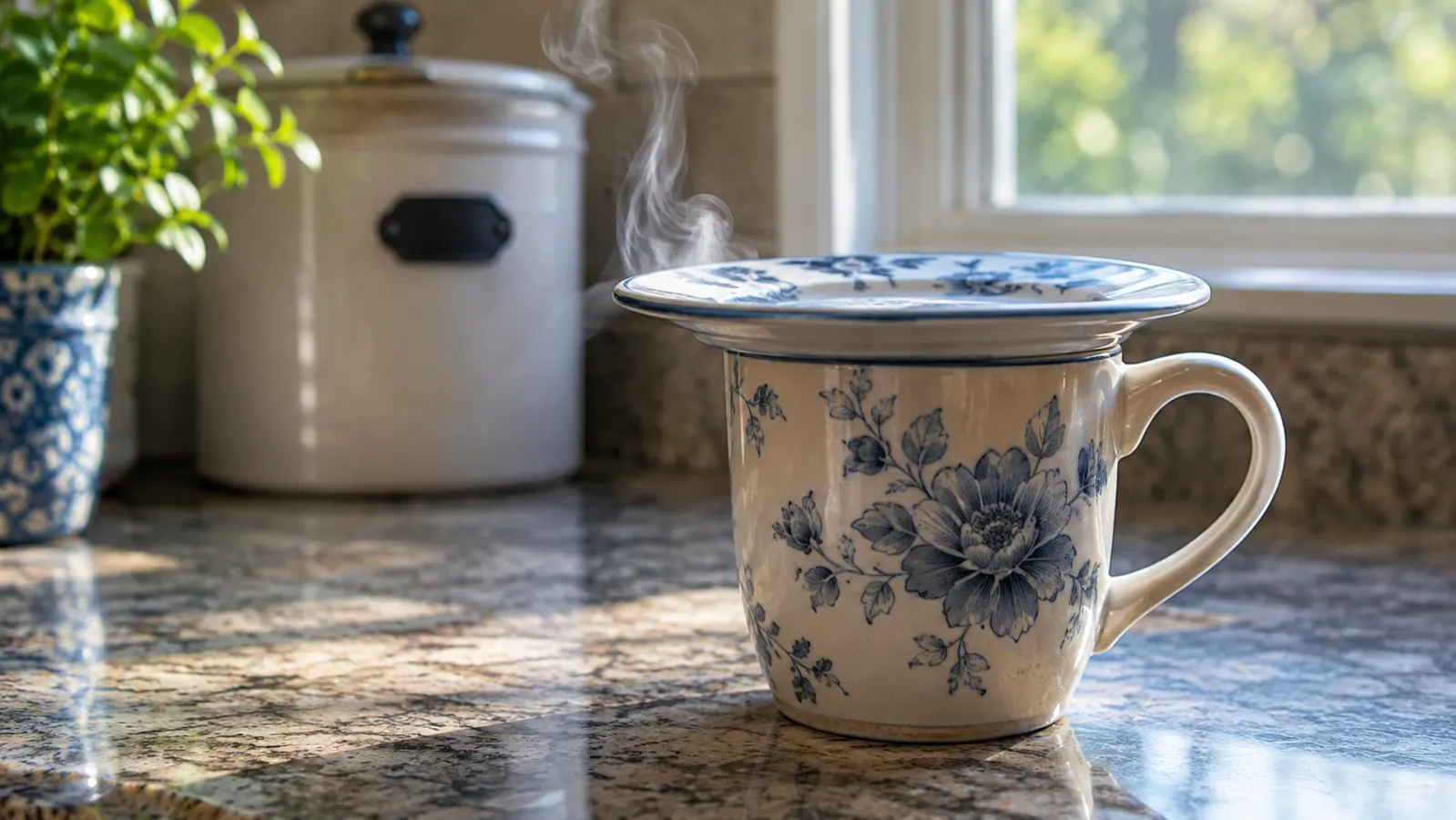
The Steeping Detail That Changes the Cup
Two minutes gives you warm water with a flower in it. Five minutes gives you the cup the box is describing. The difference is not subtle and it is the single most common reason someone tells me they did not like this tea. They dunked it, they waited a minute, they drank it, and they judged it. Set a timer once. Five minutes covered, then take the bag out rather than leaving it in the mug, because a bag left sitting gets bitter at the end of the cup.
Water temperature matters less than people online will tell you, but it is not nothing. I take the kettle off before it goes to a rolling boil and let it sit for a moment. Boiling water straight onto a floral tea flattens the lavender and pushes the chamomile forward. Also, do not squeeze the bag against the side of the mug. I did that for a year because it looked efficient. It makes the cup cloudy and slightly harsh. Let it drip and be patient.
If You Are Choosing Between This and a Plain Chamomile
This is the decision most people are actually making in the tea aisle, so I will be direct about it. Plain chamomile is softer, rounder and easier to like. It is also the cup I would hand someone who has never had herbal tea in their life. The Traditional Medicinals box is more interesting and less universally pleasing, because the lavender is doing real work in the cup and lavender is a flavor people either enjoy or do not. If you already know you like lavender, buy this. If you are unsure, buy a small plain chamomile first and come back to this one when you want something with more backbone.
I keep both in the bin, honestly. The Traditional Medicinals box is the one I reach for when I want the lavender. The plain chamomile is the one I reach for when I have a sore throat and want something neutral. They are not competing so much as covering two different evenings, and I would rather tell you that than pretend one box does everything.
What I Liked
- Caffeine free, so it does not compete with the sleep you are trying to get to
- The lavender is distinct and real, not a whisper on the label
- Organic, non-GMO and gluten free, with the herb sourcing named on the box
- Consistent from bag to bag across four years of buying it
- The label stays restrained about what the tea can do, which is rare and refreshing
- A 365-day shelf life means a box will not go stale before you finish it
Where It Falls Short
- Sixteen bags means a box every two weeks if you drink it nightly
- The floral lavender note is polarizing and the tea is not sweet at all
- You cannot adjust strength the way you can with loose leaf
- It will not do anything a normal cup of herbal tea cannot do
- Chamomile bothers some people with ragweed allergies, so a first cup deserves care
Who This Is For
This is for someone who already has an evening and wants to mark the end of it with something warm that is not caffeine. It is for the person who likes floral flavors and does not need a cup of tea to be dessert. It is for anyone who wants a box they can buy on repeat without thinking hard about it. And it is for the label reader, the person who turns the box over in the store, because this is one of the few boxes that rewards that habit. Four years in, I have not found a reason to switch, and I have looked.
Who Should Skip It
Skip it if you want plain chamomile. The lavender is not decorative here and it is not going to grow on you if you already know you dislike the flavor. Skip it if you need your tea sweet without adding anything, because this one is not sweet and it is not trying to be. Skip it if you want a tea that claims to put you to sleep, because this box is honest enough not to promise that and you will be disappointed anyway. And skip it, at least until you have spoken to your doctor, if you are pregnant, nursing, on prescription medication, or you already know ragweed sets off your allergies.
One last thing, because I wish someone had said it to me four years ago. Buy two boxes the first time. Not because the tea is so good you will race through it, but because the fastest way to quit a habit you like is to run out of it on a Tuesday night and decide it is not worth the trip. The whole point of a four-year tea habit is that it is small, easy to maintain and easy to keep. Start with enough of it to actually find out whether you like it.
The box I stopped second-guessing somewhere around year two
Caffeine free, organic, floral with a clear lavender note, 16 sealed bags to a box. Steep it five minutes and cover the cup. Talk to your doctor before making anything a nightly habit.
Amazon Check Today's Price on Amazon →