

I started taking NOW Foods Ashwagandha 450 mg about 14 months ago, during the stretch when my mother moved into assisted living. I was not looking for a personality change. I was looking for something simple to take with breakfast that might take the edge off a year that felt like it was all edges. I cleared it with my doctor first, and I take one capsule with breakfast, five days on and two days off. That is my routine, not a recommendation. The bottle says 1 capsule two to three times daily, and I will get to that.
I am 53, a former dental office manager in Burlington, Vermont, and I am not a doctor, nutritionist or pharmacist. I read labels the way some people read box scores. I want to know what is in the bottle, what the directions actually say, and whether the thing fits into a normal morning. This is the honest version of what I found, including the parts that are less tidy than a product page.
The Quick Verdict
A plain ashwagandha capsule that fit my morning routine. Subtle, not dramatic. Check the label dose with your doctor before you copy mine.
Amazon Check Today's Price →If you want the label first, start here
This is the exact NOW Foods bottle I keep in the bin to the left of my stove. Read the directions and the allergen callouts before you decide. I am not a doctor, and this is not medical advice.
Amazon Check Today's Price on Amazon →How I've Used It
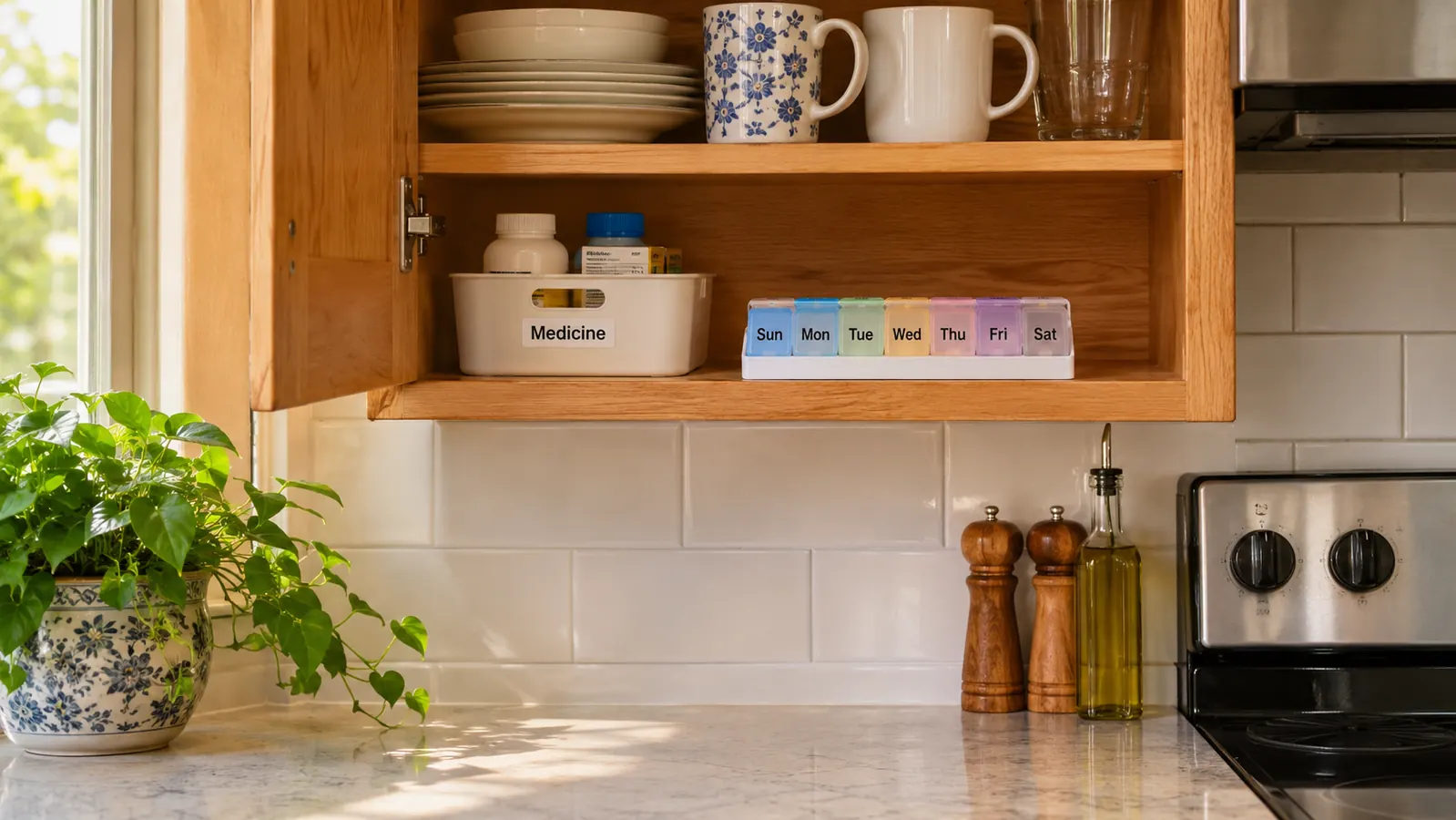
My routine is boring on purpose. I keep the bottle in a small labeled bin in the kitchen cabinet to the left of the stove, away from the heat and the steam. At around 7:30 in the morning, I take one capsule with breakfast and a full glass of water. On Saturdays and Sundays I skip it. That five-days-on, two-days-off pattern was something my doctor and I talked through, and it has been the same for about 14 months.
The label direction is 1 capsule two to three times daily. I want to be clear about that, because I am not following the fullest version of the label and I do not want anyone to think I am. I take one capsule, once a day, five days a week. The bottle holds 90 veg capsules, so at my pace it lasts longer than the label's serving count would suggest. That is one reason I have stayed with it: the routine is easy to keep.
I started during a hard stretch, not because I had a perfect plan. My mother moved into assisted living, and my days filled up with phone calls, forms and drives I had not planned for. I wanted something that did not add another decision to the morning. A single capsule next to my vitamin D softgel was about all the bandwidth I had. That is the honest origin story. It was not a wellness overhaul. It was one small thing I could keep doing.
I also want to say what I did not do. I did not cycle through five brands. I did not take it at night, and I did not take it on an empty stomach. I did not stop my other prescriptions or change anything else without talking to my doctor. That matters because when you change several things at once, you cannot tell what is doing what. My experience is narrow. It is one woman, one bottle, one 14-month stretch.

What the Label Actually Says
The front of the bottle says Ashwagandha 450 mg and standardized extract. The item form is a veg capsule. The label also carries the callouts I look for now: Non-GMO, Kosher, Halal, Vegan, Vegetarian, Dairy Free, Egg Free, Nut Free, Soy Free, and Made without Gluten. The container is a bottle, the flavor is unflavoured, and the listing shows 90 servings per container. Those are the facts I can read for myself. The rest is interpretation.
The directions on the listing say to take 1 capsule two to three times daily. That is a range, and ranges matter. Two to three capsules is 900 mg to 1,350 mg a day. My one capsule is 450 mg. I am not a small person, but I am also not a lab. My doctor and I chose the lower end for me, and I stayed there. If you are looking at this bottle and planning to follow the label exactly, read that line twice. It is not a one-capsule-a-day label.
The quality line on the label says GMP Quality Assured, with NPA A-rated GMP certification. I like seeing that because it speaks to how the product is made, not to whether it will work for me. The label also says the ashwagandha is used as a general tonic and adaptogen, and it mentions free radical scavenger and immune system support with asterisks. Those asterisks are doing real work. They mean the claims are not disease claims. I am not going to turn them into promises the bottle does not make.
I compared the label to my own habits. I take vitamin D3 in the morning, magnesium at night, turmeric with lunch, and chamomile tea after dinner. Ashwagandha is the only capsule in that group that I take five days on and two days off. That is not because the label says to do that. It is because I wanted a built-in pause, and my doctor was comfortable with it. If you need a strict daily schedule to remember something, my pattern may be more complicated than you need.
What I Noticed Over 14 Months
The first thing I noticed was nothing. That is not a typo. For the first few weeks, I did not feel calmer, sharper or different. I kept taking the NOW Foods capsule because the routine was easy and my doctor had okayed it. Around week five or six, I noticed that the tense part of my morning felt a little shorter. I was not floating through the day. I was just less likely to replay a difficult phone call in my head while I was trying to make breakfast.
The effect, if that is the right word, was subtle. I slept about the same. My energy was about the same. I did not become a person who journals or does yoga at sunrise. What changed was the volume on the background worry. During the months when my mother's care was changing, that mattered. On the days I skipped it, I cannot say I noticed a crash. That is the honest limitation. The difference was small enough that I would not bet my rent on it.
I also tracked my own patterns in a notebook, which is a very dental-office-manager thing to do. I wrote down sleep, morning mood and whether I remembered the capsule. The notes are not a clinical trial. They are a page of hashes and a few words. But they showed me that my best weeks were the weeks I also walked on the bike path and ate a real lunch. The capsule was one line in a longer list. I think that is how most supplements work for most people.
To be specific: I mean the mental tab-keeping. The unpaid bill, the call I needed to return, the question about my mother's medication. Those things still showed up. They just did not all show up at once while I was standing at the counter waiting for toast. I would not call that a fix for anything. I would call it a little more room between me and the noise. That is the level of change I am talking about.
The biggest change was not in my body. It was in my sense of control. When my mother first moved, I felt like I was reacting to every call. Having one small thing I did at 7:30 in the morning gave the day a shape. I know that sounds like a low bar. It is. But a low bar you can clear is better than a high bar you abandon in a week. That is the most honest thing I can say about 14 months with this bottle.
The Part Nobody Tells You
Ashwagandha is not a sedative. I take it with breakfast, and it does not make me sleepy. If you are looking for something to knock you out at night, this is not that. I also would not call it fast. The label says adaptogen and general tonic, which are broad words. They do not mean you will feel it on day one. They do not mean it will fix a hard season. For me, it was background support, not a switch.
The second thing nobody tells you is that the label can be more demanding than the routine you actually keep. Two to three capsules a day is a real commitment. At three capsules, a 90-count bottle is a 30-day supply. At one capsule, it lasts three months. I am not saying one is right and one is wrong. I am saying the number on the front of the bottle is not the number you will necessarily take. Read the directions. Then talk to your doctor about what fits you.
The third thing is that ashwagandha has a reputation as a calming herb, and people hear that and assume it is risk-free. It is a plant, not a placebo, and plants can interact with other things. My doctor went through my medication list before I started. I would not skip that step, especially if you are pregnant, nursing, or on prescription medication. I am not a pharmacist. I am a woman who asked questions before she added a capsule to her breakfast.
One more plain fact: this is a vegan capsule, and the label says it is free of dairy, egg, nut and soy. That is useful if you read labels for allergies. It does not tell you how the herb was grown or whether your particular body will like it. I have bought the same bottle more than once because I know what I am getting and the routine is settled. That is loyalty to a habit, not proof of anything dramatic.
What I Do Not Know
I do not know the exact withanolide percentage in my bottle. The title says standardized extract, and that is the fact I have. I am not a lab, and I am not going to invent a number to make this review sound more scientific. If that detail matters to you, ask the manufacturer or check the current label on the listing. I would rather tell you what I cannot verify than pretend I have a certificate in front of me.
I do not know how this compares to every other ashwagandha product on the market. I have not run a head-to-head trial. I have not taken the Nature Made version, so I cannot tell you which is better from my own experience. I can tell you what I look for: a clear milligram amount, a standardized extract, allergen callouts, and directions I can actually follow. This bottle has those. That is not the same as proof that it will work for you.
I also do not know what my 14 months would have looked like without the capsule. That is the problem with one-person experience. My mother's situation changed, my sleep changed, the seasons changed. I cannot separate the ashwagandha from the rest of my life. What I can say is that I kept taking it, I did not have a bad reaction, and my doctor knows it is in my routine. Those are modest claims. I am comfortable with modest claims.
What I do know is that I read the label before I bought it, and I read it again before I wrote this. This NOW Foods bottle is in the bin to the left of the stove. The capsules are in the same place every morning. I take one with water and breakfast. I skip the weekends. I see my doctor for my yearly bloodwork, and I tell her what I am taking. That is the whole system. It is not exciting. It is just a system I can keep.
What I Liked
- Clear 450 mg amount and a standardized extract on the label.
- Vegan, kosher, halal, non-GMO, and free of dairy, egg, nut and soy.
- 90 veg capsules, so one capsule a day lasts a long time.
- Easy to fold into a morning routine with breakfast.
Where It Falls Short
- Label directions say 1 capsule two to three times daily, which is more than I take.
- The effect is subtle, not a quick fix.
- Not a sedative, so it will not help you fall asleep.
- You still need to check interactions with your doctor.
Fourteen months in, the most honest thing I can say is that ashwagandha did not change my life. It made a hard stretch feel a little less loud, and that was enough for me to keep it.
Who This Is For
This is for someone who wants a plain ashwagandha capsule from a brand with a long shelf presence, and who is willing to treat it as background support rather than a rescue. It fits a morning routine. It fits a label reader. It fits someone who will ask their doctor about the dose instead of copying mine. If you are already taking vitamin D with breakfast, adding one more capsule is not a huge lift. That is the person I would hand this bottle to.
It is also for the person who has tried the complicated route and wants simple. I do not want a powder I have to mix or a tincture I have to count. I want a capsule I can take with water while the kettle heats. That is not a personality. It is a preference. If it is your preference too, this bottle makes sense.
Who Should Skip It
Skip it if you are looking for a sleep aid. Skip it if you want a fast, obvious change in your mood. Skip it if you are pregnant, nursing, or on prescription medication and have not talked to your doctor. Skip it if you will not read the directions and will assume one capsule is the full label dose. And skip it if you need a product with a detailed withanolide percentage on the front of the bottle, because that is not the information I can verify here.
I would also skip it if you are the kind of person who changes five supplements at once and then tries to figure out which one worked. You will not know. I kept everything else in my routine the same, and I still cannot prove what did what. That is not a reason to avoid ashwagandha. It is a reason to be honest about what a single bottle can tell you. My honest answer is: not everything.
Read the label, then decide with your own doctor
This is the bottle in my kitchen bin. It has been part of my morning for about 14 months. If that sounds like the kind of plain routine you can keep, start with the label and a conversation with your doctor. Not with my dose.
Amazon Check Today's Price on Amazon →