

Three winters ago my doctor tapped a line on a routine blood test printout and told me my vitamin D was low. Not dangerously low. Low enough that she wanted to talk about it. I stood in the parking lot afterward in that gray Vermont February light that never quite gets bright and thought, of course. I had spent my late forties feeling like a phone stuck at eight percent, blaming the season, my age, and twenty-five years of working inside a dental office with no windows. It had never once occurred to me that a number on a lab slip might be part of the story.
What she suggested was simple. A vitamin D3 supplement, taken daily, and a follow-up blood test in a few months. I walked into the pharmacy and bought Nature Made Vitamin D3 5000 IU softgels because the label said USP Verified, because it was the brand sitting in my mother's cupboard for as long as I can remember, and because I am the sort of person who reads the back of a bottle before she reads a word of the marketing. I have taken one softgel with breakfast for three winters now. This is the honest version: what the label actually tells you, what nobody mentioned at the counter, and the parts I would change if I ran the company.
The Quick Verdict
A plainly labeled D3 softgel that disappears into a morning routine, which is the highest compliment I can pay a supplement. The 5000 IU dose is a conversation with your own doctor, not a number to copy from my bottle.
Amazon Check Today's Price →The bottle that has sat in my cabinet for three winters
Nature Made Vitamin D3 5000 IU is a 180 count bottle of unflavored softgels, gluten free and USP Verified, with 125 mcg of vitamin D3 in each one. If your own doctor has already had the dose conversation with you, this is a straightforward way to keep it going.
Amazon Check Today's Price on Amazon →Here is the short version before the long one. It is a small unflavored softgel that I swallow with water at 7:30 in the morning and then forget about for the rest of the day. It has never upset my stomach. It is not exciting and it is not supposed to be. The interesting part of this bottle is not the softgel at all, it is the number on the front and the conversation that number should start with your own doctor.
What the Label Actually Says
5000 IU is the headline and 125 mcg is the translation. Labs report vitamin D in nanograms per milliliter, bottles talk in international units, and those two are not the same language. If your printout says one number and your bottle says another, you are not comparing apples to apples until you convert. I wrote my dose in pencil on the corner of my last printout and keep it in the folder with the rest of my test results, which is the least glamorous habit I have ever recommended to anyone, and the one that has saved me the most confusion.
The rest of the label is short and mostly reassuring. Softgel. Unflavored. Gluten free. The allergen line lists both gluten and soy, which is worth a second look if soy is on your own list. I noticed it because my sister is careful about soy and I had to read that line twice to be sure I was reading it correctly. It is also USP Verified, which means an outside group has checked that what the bottle claims to contain is actually in the bottle. That stamp is the most useful thing on the package, and it is about the size of my thumbnail.
The two benefits printed on the listing are bone support and immune system support, each with a little dagger after it. That dagger is doing more work than most people realize. It typically points to the standard line that these statements have not been evaluated by the Food and Drug Administration and that the product is not intended to diagnose, treat, cure or prevent any disease. I am not a doctor, a pharmacist or a nutritionist. I am a former dental office manager with a folder of lab results, and I read that line every single time I turn the bottle around.
The line about being the number one pharmacist recommended vitamin and supplement brand is a marketing claim with an asterisk attached. It may well be true. It is also not a lab result, and it is not the reason I buy the bottle. I buy it because the label is plain, the stamp is real, and my doctor's number matched what is inside.
One quiet advantage of the softgel form that the label does not bother mentioning: there is nothing to split, crush or chew. I spent twenty-five years working in a dental office, which is not the same as a pharmacy, but it did teach me to appreciate anything that goes down with a swallow of water and no ceremony. That is not a health claim, it is a convenience claim, and after three winters I will take the convenience.
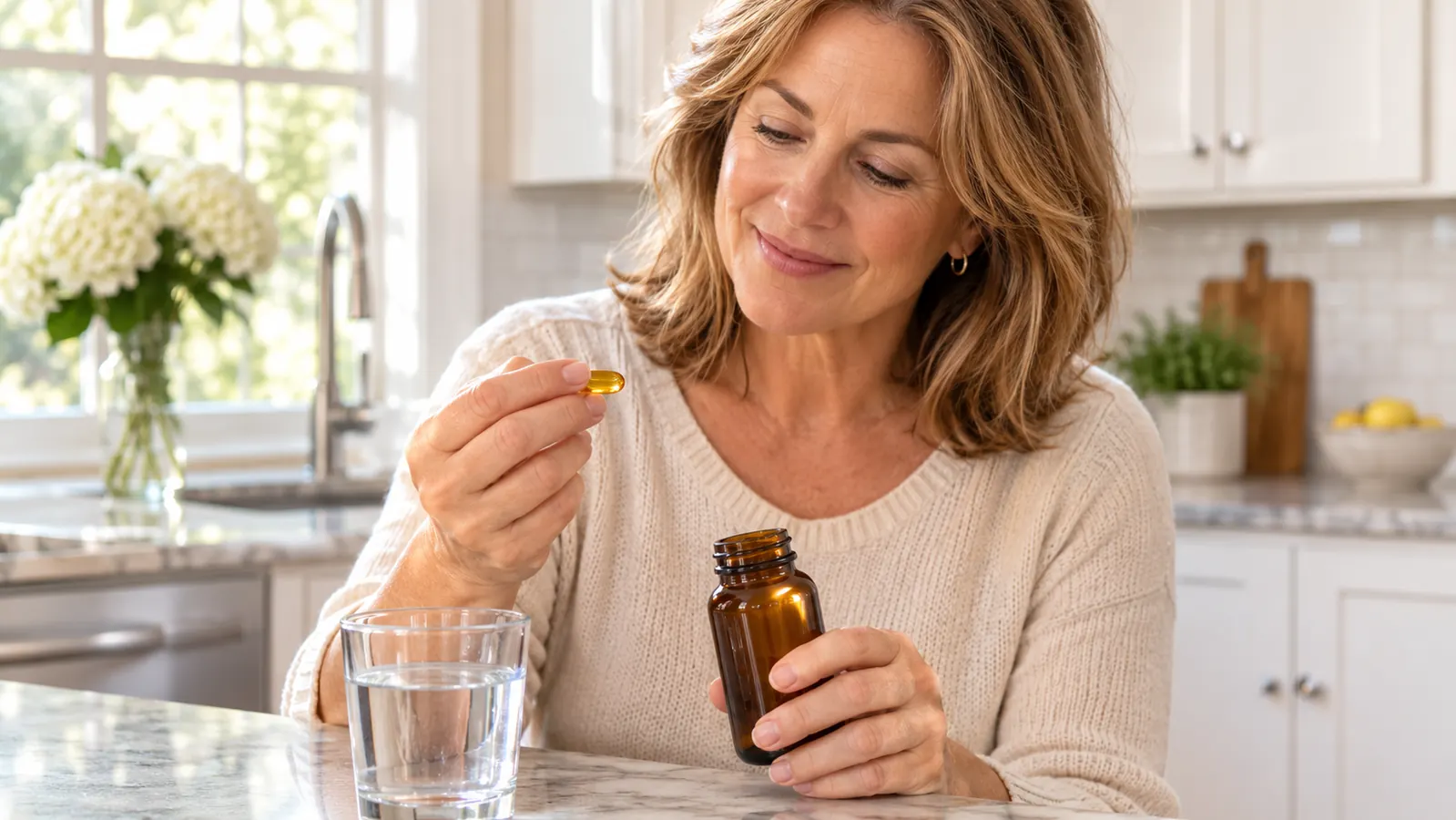
5000 IU Is an Amount, Not an Instruction
This is the part I wish someone had said out loud at the counter. Five thousand units is more than a lot of daily multivitamins carry, and it is not a number you choose because a stranger on the internet takes it. The listing itself frames this bottle for people with higher vitamin D needs or a deficiency, which is doctor territory from the first sentence. My number came from a blood test. My husband Paul takes a lower dose on his own doctor's advice, from a different bottle, and we are both right.
If you already take a multivitamin or a calcium product with D in it, add up what you are actually getting before you put a softgel on top of it. That is the sort of arithmetic nobody enjoys and everybody should do once. I keep a small card in the kitchen drawer with what I take and when, not because I am an organized person, but because I once took the same thing twice in one morning and felt foolish enough to start writing things down.
What Nobody Tells You at the Counter
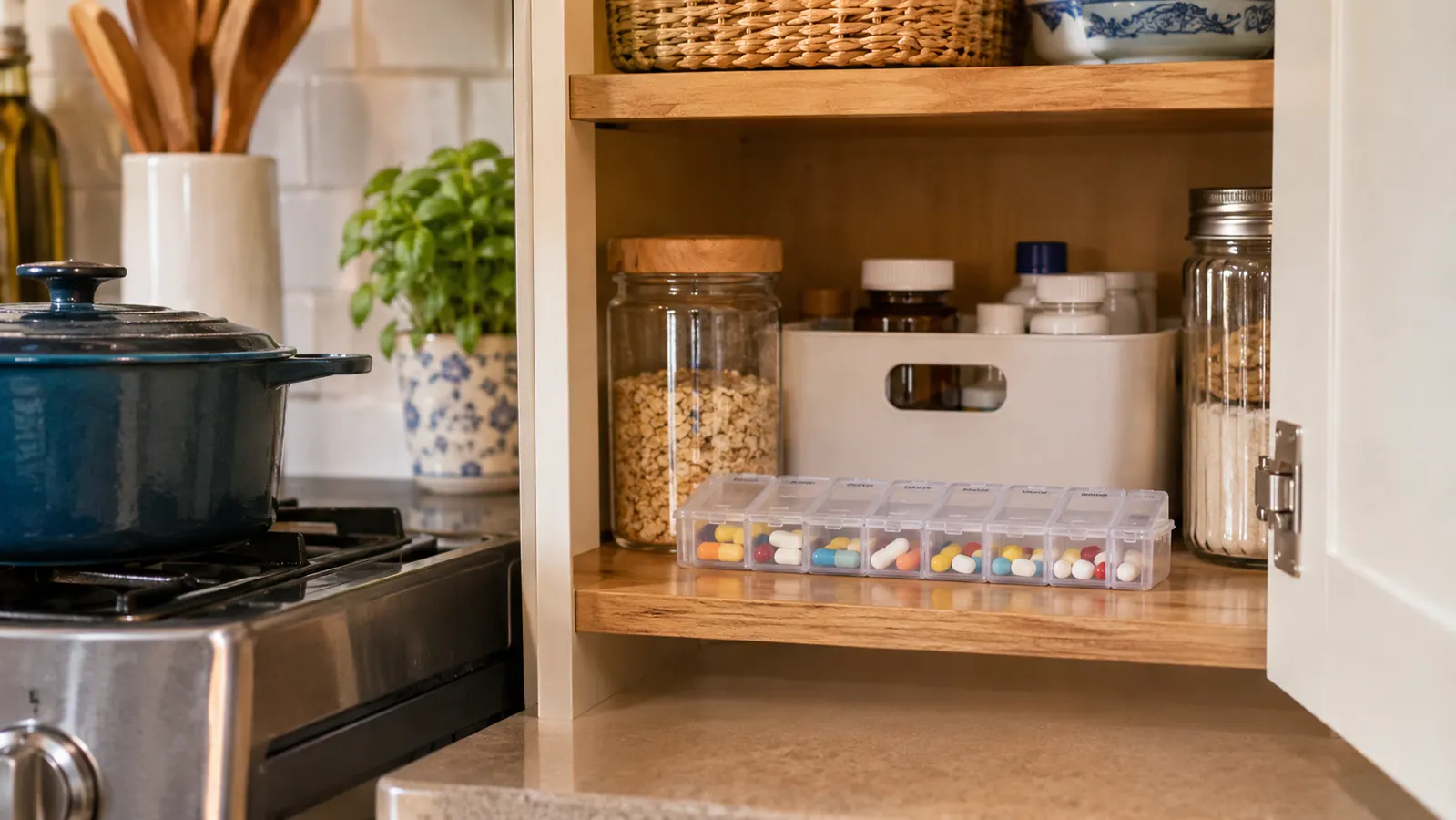
Nobody tells you that the boring part is the whole thing. A supplement you take three days a week is a different experiment than one you take every day at the same time. I take mine with breakfast, around 7:30, because breakfast is the one meal I never skip and because a habit attached to another habit tends to survive. The bottle lives in a small labeled bin in the cabinet to the left of the stove, deliberately not in the cabinet above it. Heat and steam from a boiling pot are not kind to a softgel, and that cabinet gets both.
Nobody tells you that you will not feel it working. Vitamin D is not a cup of coffee. There is no afternoon where you notice a difference and no week where you can point at something and say, that was the softgel. The only feedback I have ever had is a number on a printout once a year, which is why my doctor rechecks my levels annually and why I would not trust a supplement routine without that check. If you are waiting to feel something, you will decide it is doing nothing and quit by the middle of March.
And nobody tells you that the bottle is a long commitment. 180 softgels at one a day is most of a year. That is fine if your dose stays put and less fine if your doctor changes it in the spring. Check the date on the bottom before you give it shelf space, and if you travel, decant a week into a pill organizer rather than hauling the whole bottle through an airport.
One more thing nobody says: the bottle is not a meal. I take mine with food, at breakfast, because that is when I remember, and because swallowing anything on an empty stomach has never agreed with me. That is a preference, not an instruction on the label. Your own routine may look nothing like mine, and it should still be built around whatever anchor already exists in your day.
Three Winters In: What Changed and What Didn't
What changed: my numbers sit in a range my doctor is happy with, checked once a year, and the routine takes about four seconds. What did not change: my feelings about February in Vermont. I am not going to sit here and tell you a softgel transformed my winters, because it did not, and because I honestly do not know what my levels would look like without it. What I know is that my doctor flagged a low number, suggested a supplement, and the number came back up while she was watching it. Anything past that is me guessing.
The other honest thing is that I cannot untangle this bottle from the rest of my routine. I also take magnesium at night, turmeric with lunch and ashwagandha in the morning, and I have no way to credit one and not the others. What I can tell you is that this is the one I never think about. No aftertaste I have ever noticed, no upset stomach, nothing to dread at 7:30 in the morning. In a routine made of small things, the one that disappears is the one that lasts.
The number on the front of the bottle is an amount, not an instruction. Mine came from a doctor, and it came with a blood test attached.
The Parts I'd Change
The front of the bottle shouts the dose and the back does all the explaining. I would flip that. Put the 125 mcg and the allergen line in the same size type as the big number, and add a plain sentence about who this dose is actually for. I say that as someone who reads labels for fun, but also as someone who watched a friend reach for the largest bottle on the shelf because largest sounded strongest.
There is also nothing built into the packaging to tell you whether you took today's softgel. No day markings, no calendar strip, nothing. A weekly pill organizer solved that for me years ago. And the 180 count size means that if your dose changes, you are either finishing a bottle that no longer matches your instructions or having an awkward conversation about it. Nature Made sells smaller bottles, and if you are new to this, that is where I would start.
What I Liked
- The label is clear about what is inside: unflavored softgels, gluten free, 125 mcg of vitamin D3 in each one
- USP Verified, so an outside group has checked the contents against the claim on the bottle
- Easy to build into a morning habit, one softgel with a swallow of water and no aftertaste I have noticed
- A 180 count bottle means fewer reorders and less chance of running out in the middle of winter
- The listing is upfront that this dose is for people with higher vitamin D needs or a deficiency, rather than pretending it suits everyone
Where It Falls Short
- 5000 IU is a dose, not a default, and it needs your own doctor's sign off plus a follow-up blood test
- The allergen line lists both gluten and soy, worth a second look if soy is a concern for you
- No day markings on the bottle, so a weekly pill organizer is basically required
- The large bottle is awkward if your dose changes mid year
- The marketing lines on the label are still marketing lines, asterisk and all
The Questions I'd Ask Before You Buy
Three questions, in order. What was my last vitamin D number, and when was it taken? What dose did my doctor actually say, in micrograms, so I can compare it to a label? And what else am I already taking that has D in it? If you cannot answer the first two, the bottle can wait. It is not going anywhere, and the number on the front of it is not a finish line.
The fourth question is about size. I buy the 180 count because I have been on the same dose for three winters and I would rather not reorder. If you are new to this, or if your doctor is still adjusting your dose, a smaller bottle is the smarter first purchase, even if the bigger one looks tempting on the shelf. You can size up once the number settles.
Who This Is For
This is for someone whose own doctor has already looked at a blood test and had the dose conversation. It suits a person who wants one softgel, once a day, from a brand with a verification stamp on the label, and who is willing to get rechecked rather than guess. It also suits anyone who already buys the smaller Nature Made sizes and would like to stop reordering every few weeks. If that sounds like you, the routine mostly runs itself.
Who Should Skip It
Skip it if nobody has ever tested your vitamin D and you are picking a dose from a review, mine included. Skip it if you are pregnant, nursing, or on prescription medication and have not talked to your doctor or pharmacist first, because interactions are exactly the sort of thing a former dental office manager should not be advising you on. Skip it if you already take a multivitamin with D and have not added up the total. And skip the 5000 IU size in particular if your doctor named a lower dose, because there is no prize for taking more.
Three winters in, the bottle is still in the bin to the left of the stove, still one softgel at 7:30, still nothing I think about. That is the whole review, really. I did not find anything dramatic in a softgel, and I would be skeptical of anyone who told you they had. I found a plain label, a number that matched my doctor's instructions, and a habit small enough to keep. If your situation looks like mine, that is enough. If it does not, the call to your own doctor comes first, and it takes about fifteen minutes.
If your doctor already named your dose, this is the bottle I keep
One softgel with breakfast, 125 mcg of vitamin D3, gluten free and USP Verified, in a 180 count bottle from Nature Made. Bring the label to your next appointment and let your own numbers decide whether it stays in the bin by the stove.
Amazon Check Today's Price on Amazon →